
A Eulogy
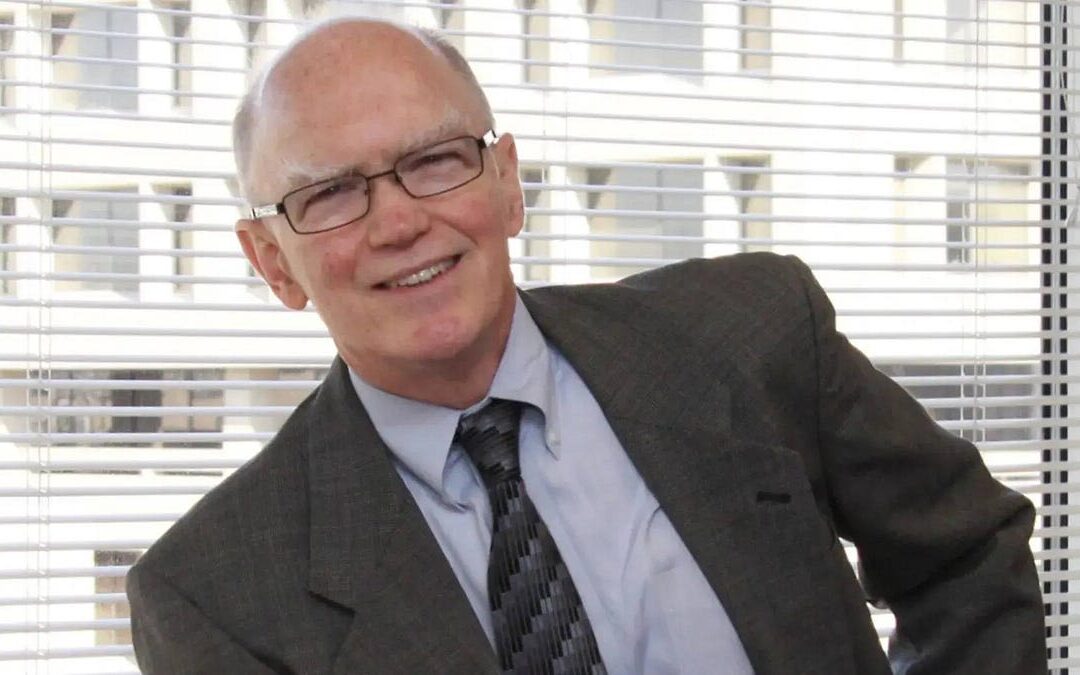
My friend and mentor, Stewart Baker, passed away on April 30. You can read the obituary that his family wrote here. Likewise, you can read a set of remembrances from his Lawfare colleagues, here.
I was honored to be asked to give a eulogy for Stewart at funeral cermemony last Saturday. This is what I said:
I joined DHS as Stewart’s Deputy in the Fall of 2005. Before that we had been professional colleagues, often bonding over the perceived errors of our liberal opponents who (we thought) didn’t really understand technology, surveillance or the threat of terrorism post 9/11. After I joined DHS, we began what grew to be the closest and deepest professional friendship I have had. Stewart was both a mentor and a friend. More importantly, he was a selfless man who gave of himself seemingly without limit.
One of my favorite examples of that comes from early on in my time at DHS. I’d been there only a few weeks when our Secretary, Michael Chertoff, set off to the UK to meet his opposite number, the Home Secretary Charles Clarke. The agenda was all the hot button issues of the day – counter-terrorism; information sharing; privacy; travel restrictions and the like. It was the sort of trip where Stewart would have appropriately accompanied the Secretary.
But he sent me. And before I went, he told me explicitly that he was sending me because this was a chance for me to build a separate relationship with Secretary Chertoff. Stewart’s plan worked – over the next several years I got a chance to work directly with Chertoff on a number of matters. But what was more remarkable to me then (and still is today) is how willing Stewart was to step aside and foster my professional growth. Let’s be clear – nobody ever called Stewart a shrinking violet and I’m sure he would have loved the politics and policy of that trip. But in that case (as he did so often in his career) Stewart saw value in helping others on their own professional paths. How many bosses do you know who affirmatively want their subordinates to develop that sort of independence?
And it wasn’t just me. Over the past weeks there has been an outpouring of remembrances of Stewart on social media. I can’t tell you how many dozens of them took a form of something like: “When I was just a junior ____, Stewart was willing to talk with me and hear me out.” Or “I still give Stewart-derived advice to the lawyers I work with.” Or, “If not for Stewart I would never have become ____”
And it wasn’t just personal advice and support. Stewart’s engagement with the law was, literally, global. One Israeli who knew Stewart wrote me to say “My legal colleagues and I listen[ed] to [his] podcast diligently. It was an anchor for discussions, and indicator of what’s important. [Stewart] played a role in forging cyberlaw as a[n independent] discipline.” Not a bad legacy all that.
Of course, Stewart was not all serious law and policy. Anne has said she wants to celebrate his life, so here’s one funny story that has stuck with me. Stewart was, of course, very proud of his Scots heritage and their reputation for parsimoniousness – a trait for cheapness that Stewart wore as a badge of honor. Now, I am Jewish and we, too, have a somewhat invidious reputation for being cheap. But when we joked together it wasn’t at all inapt – we competed at times to see who could be cheaper (and, to be clear, Stewart typically won those battles).
This trait came to a joyful head with the advent of a program known as Privium a program which, like Global Entry here in America, came with expedited border clearance. It was developed for Schiphol airport by the Dutch, who also have a well-deserved reputation for being tightfisted. There came a time when we entered into negotiations with the Dutch to exchange clearances – Privium for Global Entry.
And boy was that fun to watch. Talk about a battle of the titans. Of course, it was mostly in good fun since we all knew that the exchange was a win-win. But I clearly remember Stewart trying to negotiate for a discount on food at Schiphol for the DHS staff who would be there. In the end, I think the Dutch held Stewart to a draw.
Which brings me to one last point that is important to make. Stewart was strong-headed. He was provocative. And he was a determined foe. And he didn’t like losing … at all. But he was not set in stone. Perhaps my most cherished memory of Stewart involved a relatively obscure issue relating to immigration and asylum where, after a long hard discussion, he simply said to me: “You know, you’re right. I was wrong.” That characteristic of self-reflection and intellectual honesty was, to my mind, his best trait.
Stewart was a wonderful mentor and a close friend. His was a happy warrior whose sharp wit and piercing intellect were a joyful part of a challenging field of law and policy. He seemed to me eternal and I cannot believe he is gone. I will miss him terribly.
RIP, my friend. Your memory will always be a blessing.